About This Tour
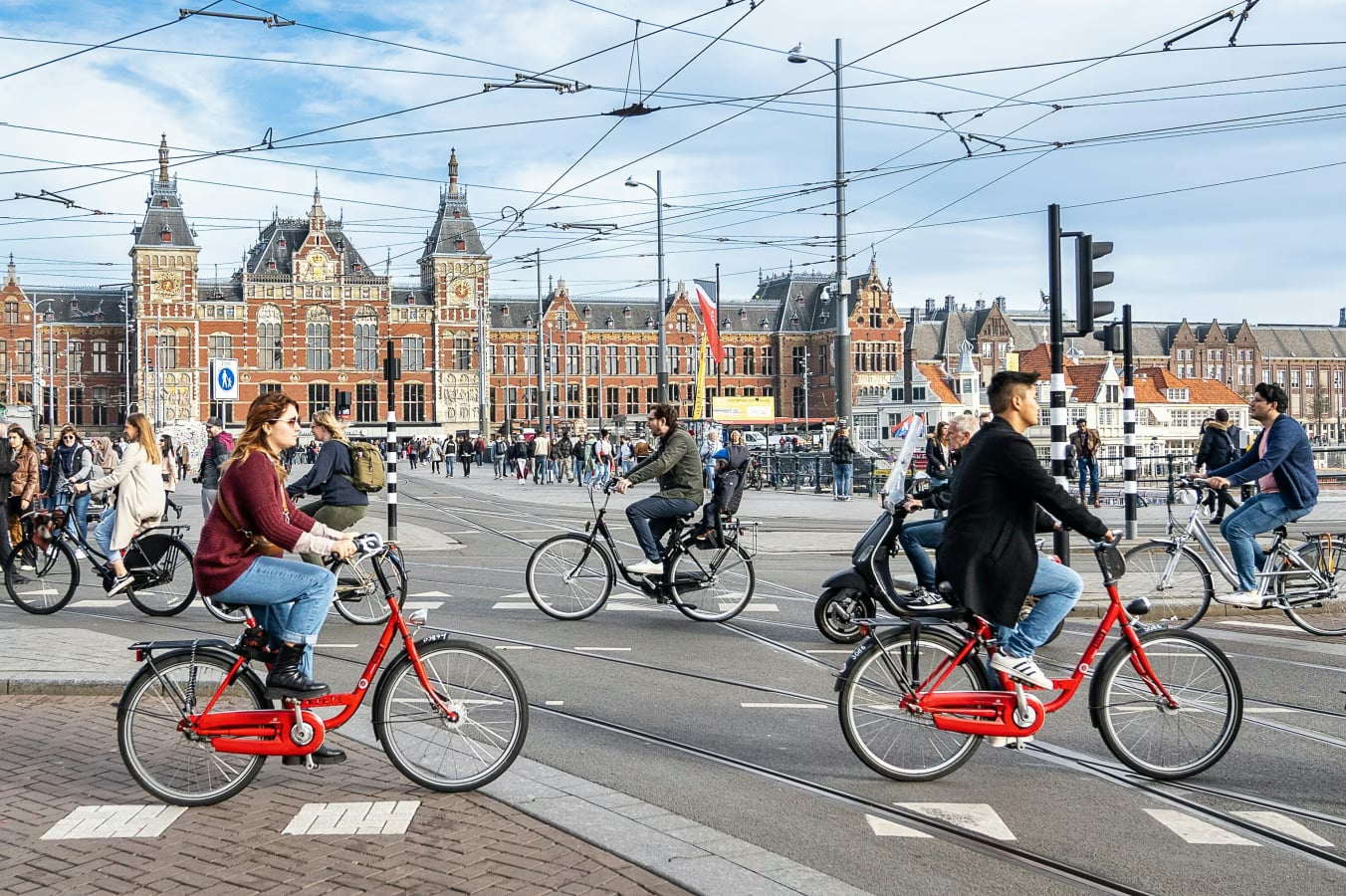
Behind an ordinary canal house near the station, a full Catholic church sits concealed in the attic. It is called Our Lord in the Attic. Climb the narrow stairs and you find pews, an altar, and an organ under the roof. It was finished in 1663, when Catholics could not worship in public. So they built a church out of sight, and the city quietly looked the other way. Starting at Central Station and ending on Dam Square, this audio walk threads past the Oude Kerk and the Royal Palace. Here is the thread that ties it together: in Amsterdam's old center, the holy and the worldly sit right on top of each other. The Oude Kerk is Amsterdam's oldest church, and it stands in the middle of the red-light district. The Royal Palace started life as the city hall, built on wooden piles sunk into soft ground. The streets here are cobbled and uneven, so watch your footing. Look out for bikes too, because riders move fast and expect their lane. Dam Square fills up by midday. Start early if you can.
- Duration
- 2h 30m
- Distance
- 6.5 km
- Stops
- 32 locations
- Languages
- 9 languages


Updated 2026-01-30
Interactive Map
Tour Stops (32)
Stop 1: Amsterdam Central Station
Amsterdam Centraal - Cuypers’ grand city gateway, built on islands in the IJ and opened in 1889.
Stop 2: Basilica of Saint Nicholas
A grand 19th-century Catholic basilica facing the station - crowned by a striking dome and rich neo-Baroque detail.
Stop 3: Bicycle City, Real Rules
Why bikes rule Amsterdam - and how to read the street so you don’t step into a fast-moving bike lane.
Stop 4: Our Lord in the Attic Museum (Ons' Lieve Heer op Solder)
A hidden 17th-century Catholic “house church” above a canal house - a full attic church built in secret and now a museum.
Stop 5: Oude Kerk and the Belle Statue
Amsterdam’s oldest church beside the Belle statue - a medieval landmark in the heart of De Wallen, where old and new stories meet.
Stop 6: De Wallen (Red Light District) - Majoor Bosshardtbrug - Red Light Secrets Museum
De Wallen up close - canal lanes, window lights, the Majoor Bosshardtbrug, and the Red Light Secrets Museum behind the scenes.
Stop 7: Amsterdam Chinatown (Zeedijk - Geldersekade)
Amsterdam’s Chinatown around Zeedijk and Geldersekade - lanterns, Asian shops, and the striking He Hua Temple near Nieuwmarkt.
Stop 8: King’s Day, the City in Orange
One day a year the canals turn into a moving party - orange outfits, boat parades, and the famous free market.
Stop 9: Nieuwmarkt
A lively old square built around De Waag - a former medieval city gate turned weigh house, famous for markets and a fierce metro-era protest story.
Stop 10: Zuiderkerk
A landmark 17th-century church by Hendrick de Keyser - Amsterdam’s first purpose-built Protestant church, with a tower that still watches over the canals.
Stop 11: Rembrandt House Museum (Museum Het Rembrandthuis)
Step into Rembrandt’s real canal house - the place where he lived, taught, and worked, with an attic studio and daily paint and etching demos.
Stop 12: Jewish Museum Amsterdam (Joods Museum)
A powerful museum inside four historic synagogues - telling the story of Jewish life in the Netherlands, right in Amsterdam’s old Jewish Quarter.
Stop 13: Dutch National Opera & Ballet (Stopera)
A bold, controversial 1980s landmark on the Amstel - Amsterdam’s main opera and ballet house inside the Stopera complex.
Stop 14: Staalmeestersbrug
A classic wooden drawbridge over the Groenburgwal - famous for its postcard view of the Zuiderkerk tower and its “love lock” reputation.
Stop 15: Tulips, Status, and a Famous Bubble
How tulips became a Dutch symbol - including the 1600s craze that turned rare bulbs into luxury objects.
Stop 16: Rembrandt Monument and “The Thinker” on Rembrandtplein
On Rembrandtplein, meet a 1852 Rembrandt monument and a modern astronaut “Thinker” - two very different ideas of fame, facing each other.
Stop 17: Koninklijk Theater Tuschinski (Pathé)
Amsterdam’s most famous “movie palace” - a 1921 Art Deco dreamscape, restored to glory and granted the Royal title in 2021.
Stop 18: Munttoren
A medieval gate tower turned Amsterdam icon - rebuilt in 1620 with a four-faced clock and a carillon that still marks the city’s rhythm.
Stop 19: Allard Pierson Museum of Antiquities
The University of Amsterdam’s archaeology museum - ancient Egypt to Rome, inside a former Dutch central bank building by the canal.
Stop 20: Equestrian Statue of Queen Wilhelmina
A striking bronze of young Queen Wilhelmina on horseback, unveiled in 1972 on Rokin - Amsterdam’s only equestrian statue.
Stop 21: Old Town Clock Carillon on Taksteeg (Siebel Carillon)
A hidden street-side carillon above Taksteeg - 12 bells, a clock face, and little moving figures that appear when the tune plays.
Stop 22: Begijnhof
A quiet medieval courtyard hidden off Amsterdam’s busiest streets - home to a secret chapel, an English church, and one of the city’s oldest houses.
Stop 23: Amsterdam Museum and the Portrait Gallery of the 17th Century
Amsterdam’s city museum by the Amstel - and the famous group-portrait “gallery” that once lined its grand hall with Golden Age faces.
Stop 24: The 9 Streets (De Negen Straatjes)
Nine small streets linking Amsterdam’s grand canals - boutiques, cafes, and postcard bridges in the UNESCO canal belt.
Stop 25: Canal Story - Leaning Houses and Hooked Beams
Why canal houses tilt forward and how Amsterdam’s famous roof hooks turned windows into delivery doors.
Stop 26: Canal Story - The Canals as a City Machine
Transport, drainage, defense, and perfect sightlines - how Amsterdam’s canals quietly run the city and shape its views.
Stop 27: Westertoren and the Anne Frank Monument
The Westertoren’s famous bells over the Jordaan, and a nearby Anne Frank monument that quietly anchors the area’s wartime memory.
Stop 28: Anne Frank House
A canal house that holds the Secret Annex - where Anne Frank hid for over two years and wrote her diary.
Stop 29: Dutch Comfort Food, Made for the Street
From herring to stroopwafels - quick Dutch classics that taste best while walking along canals.
Stop 30: The New Church (De Nieuwe Kerk) and Magna Plaza
Two Dam Square icons - a medieval royal church and a neo-Gothic former post office turned shopping arcade.
Stop 31: Royal Palace Amsterdam (Koninklijk Paleis Amsterdam)
A 17th-century “people’s palace” on Dam Square - built as Amsterdam’s city hall, later turned into the royal reception palace.
Stop 32: National Monument and Madame Tussauds Amsterdam
Dam Square’s biggest contrast - a national WWII memorial for silence and reflection, and a wax museum built for selfies and pop culture.
Tips & Recommendations
- Start early in the morning to avoid crowds around Dam Square and the Red Light District.
- Wear comfortable walking shoes, as most streets are cobblestone or uneven pavement.
- Check opening hours in advance for museums and historic houses, as some have limited entry times.
- Dress modestly when entering active churches or religious sites.
- Be mindful of cyclists and stay off bike lanes when walking.
- Bring cash for small cafés or market stalls, as not all accept cards.
- Visit markets and river areas during daylight for the best atmosphere.
- Plan indoor stops as backups in case of rain, which is common year-round.