About This Tour
This walking tour covers Florence’s historic center and the most important Renaissance landmarks in the city. It brings together Florence’s famous piazzas, monumental churches, Medici-era architecture, and iconic bridges across the Arno. The route is designed for travelers who want a clear overview of what makes Florence a top destination in Italy, with a mix of world-famous highlights and lesser-known details that reveal how the city developed over time. The experience focuses on the themes that shaped Florence: civic power, religious life, merchant wealth, and the artistic culture that flourished in the Renaissance. Along the way, travelers pass major public spaces where Florentine politics played out, as well as the religious sites that anchored neighborhoods and patronage. The Medici influence is a constant presence, visible in key buildings and in the way art, learning, and authority were woven into daily life. This tour also captures the atmosphere of central Florence, from lively squares and elegant streets to the calmer character of the Oltrarno. River views and historic crossings provide natural moments to pause and take in the city’s skyline and rooftops. It is a strong option for first-time visitors looking for a structured introduction, as well as returning visitors who want to connect the city’s headline sights with its deeper urban story. The overall pace suits a half-day walk, with plenty of flexibility to add museum visits or church interiors based on interests and ticket availability.
- Duration
- 1h
- Distance
- 3.5 km
- Stops
- 19 locations
- Languages
- 9 languages


Updated 2026-01-19
Interactive Map
Tour Stops (19)
Stop 1: Obelisco dei Caduti delle Guerre d'Indipendenza
A 15-meter obelisk in Piazza dell’Unità Italiana honoring Italy’s wars of independence and later fallen.
Stop 2: Medici Chapels and the Laurentian Library at San Lorenzo
Michelangelo’s San Lorenzo - Medici Chapels, the New Sacristy, and the Laurentian Library staircase.
Stop 3: Piazza di San Lorenzo
Piazza di San Lorenzo - the unfinished basilica façade, Medici dome views, and Giovanni delle Bande Nere monument.
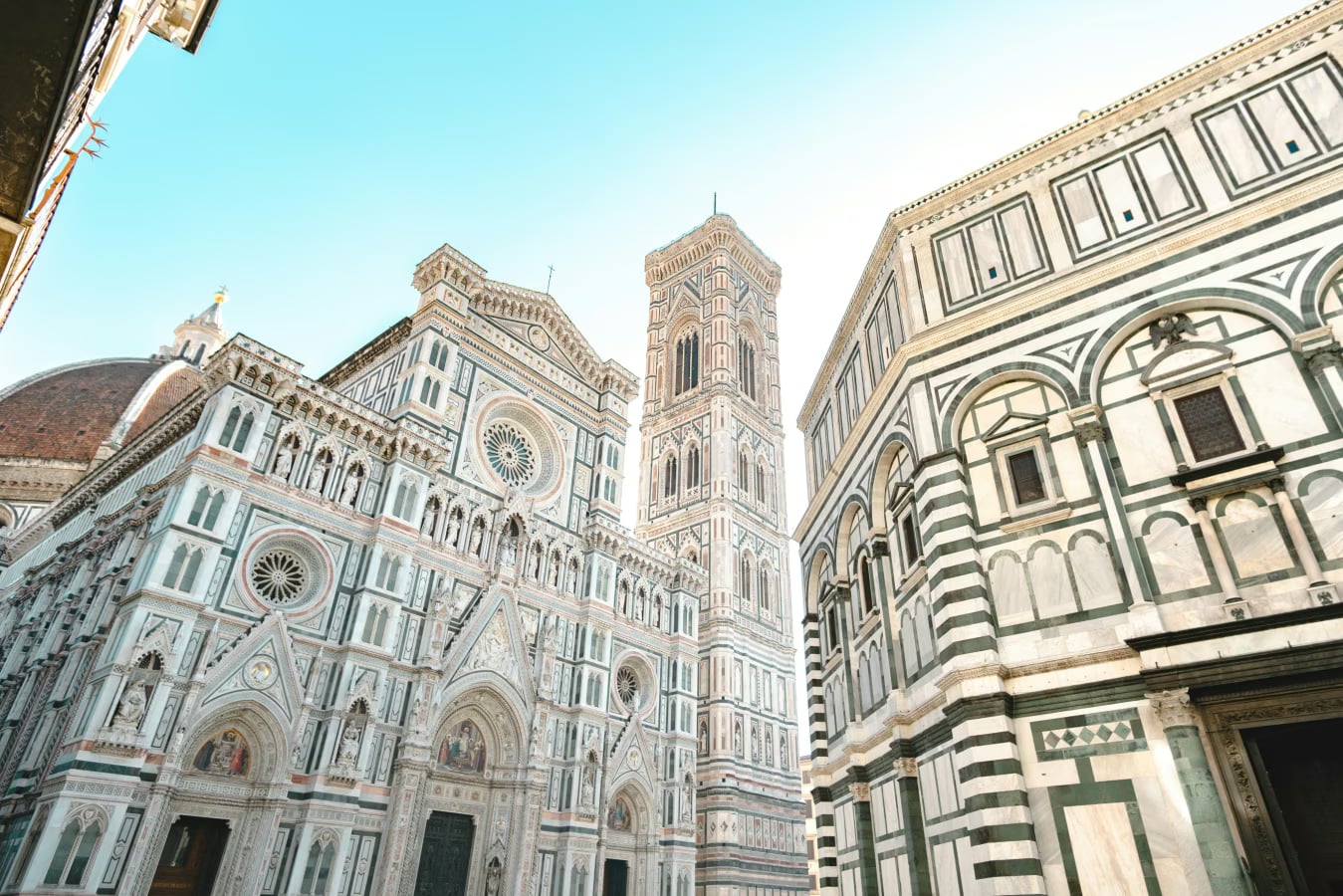
Stop 4: Giotto's Bell Tower, Baptistery of St. John, and the Crypt of Santa Reparata
Florence Duomo Square trio - Giotto’s Bell Tower, the Baptistery’s famous doors, and the hidden Crypt of Santa Reparata.
Stop 5: Piazza della Repubblica
iazza della Repubblica - Florence’s former Roman forum and old market site, with the Arcone arch, the Column of Abundance, and historic cafés.
Stop 6: Church & Museum of Orsanmichele
Orsanmichele - a former medieval grain market turned church, famous for guild statues and the Orcagna tabernacle.
Stop 7: Piazza della Signoria and Loggia dei Lanzi
Piazza della Signoria - Palazzo Vecchio’s Arnolfo Tower, Loggia dei Lanzi sculptures, and the hidden Importuno carving.
Stop 8: Palazzo Vecchio - Studiolo of Francesco I and the Sala degli Elementi
Palazzo Vecchio highlights - Francesco I’s Studiolo and Vasari’s Sala degli Elementi.
Stop 9: Statues of the Illustrious Tuscans at Piazzale degli Uffizi
Uffizi arcade statues - Giotto, Leonardo, Michelangelo, and Dante in the 19th-century “Illustrious Tuscans” gallery.
Stop 10: Uffizi Galleries and the Statues of Niccolò Machiavelli and Galileo Galilei
Uffizi exterior stop - Vasari’s “offices” building with the Machiavelli and Galileo statues in the arcade niches.
Stop 11: Ponte Vecchio and the Benvenuto Cellini Monument
Ponte Vecchio - Florence’s shop-lined bridge over the Arno, with the Vasari Corridor above and the 1900 Cellini bust-fountain.
Stop 12: Palazzo Pitti
Palazzo Pitti - the Medici’s Oltrarno palace with the Boboli Gardens rising behind it.
Stop 13: Saint Mark's English Church
St Mark’s English Church - an Anglican stop on Via Maggio, surrounded by Oltrarno shops and galleries.
Stop 14: Ponte Santa Trinita
Ponte Santa Trinita - Ammannati’s 1567-1569 bridge with the Four Seasons statues and classic Arno views.
Stop 15: Piazza Santa Trinita
Piazza Santa Trinita - the Column of Justice, Santa Trinita church, and Palazzo Spini Feroni by Via de’ Tornabuoni.
Stop 16: Palazzo Dudley
Palazzo Dudley - a historic corner palace by Via de’ Tornabuoni, linked to Robert Dudley and later redesigned by Adolfo Coppedè.
Stop 17: Church of Saints Michele and Gaetano
San Gaetano - a Medici-backed Baroque church on Piazza Antinori, right by Via de’ Tornabuoni.
Stop 18: Colonna della Croce al Trebbio
A hidden medieval column and cross at a tiny street junction near Santa Maria Novella.
Stop 19: Piazza di Santa Maria Novella and Basilica of Santa Maria Novella
Piazza Santa Maria Novella - Alberti’s façade, turtle obelisks, and major art inside the Dominican basilica.
Tips & Recommendations
- Start early in the morning to avoid crowds in the central squares.
- Wear comfortable walking shoes as the route covers stone streets and long distances.
- Check opening times in advance if planning to enter churches or museums.
- Dress modestly for religious sites, with covered shoulders and knees.
- Keep personal belongings secure in busy areas, especially near major attractions.
- Take short breaks at cafés in historic squares to rest and hydrate.
- Late afternoon offers softer light and fewer tour groups.
- Bring sun protection in warmer months, as shade is limited in open piazzas.