About This Tour
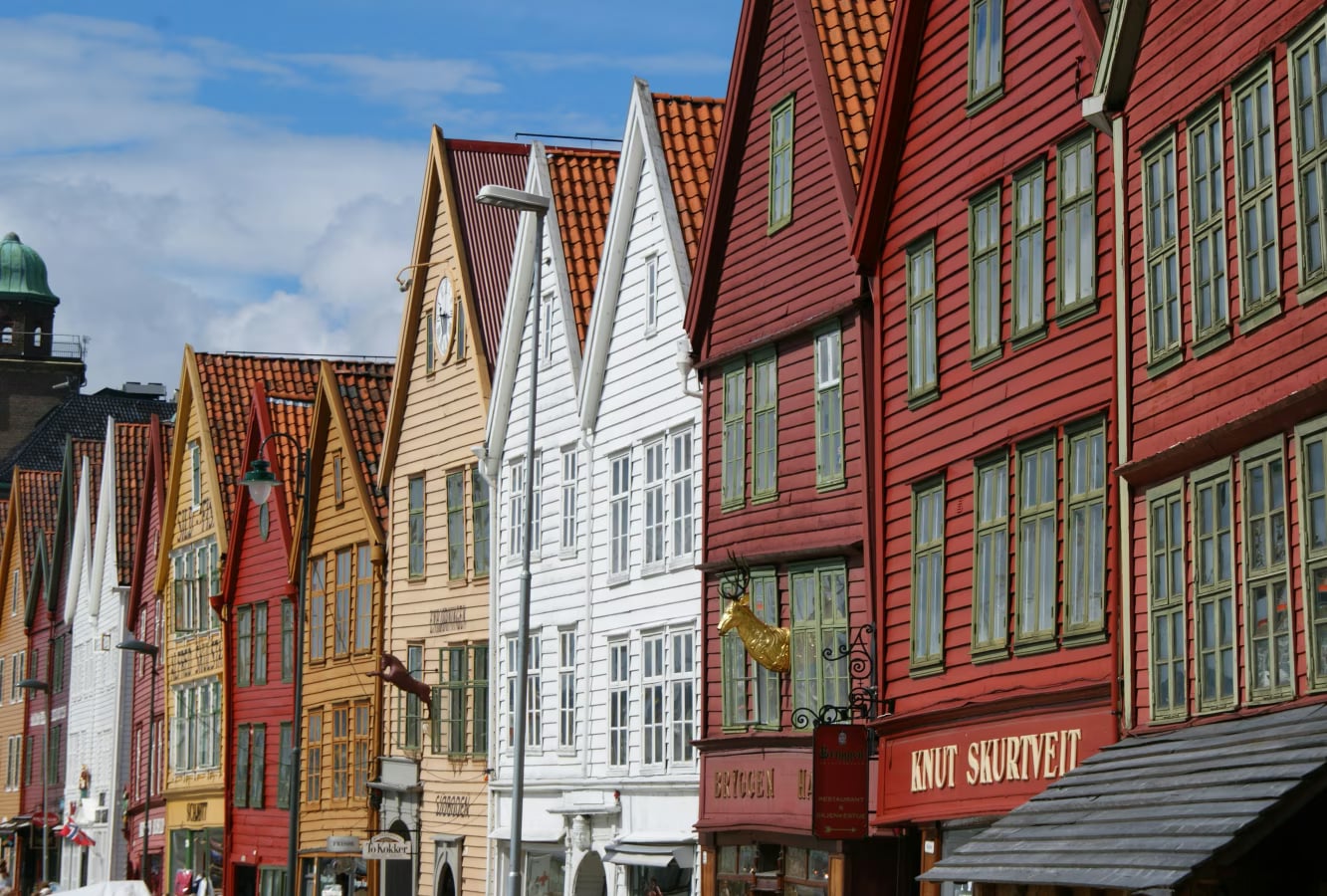
From the Dramshusen shed and its wooden cargo boom to the Bryggen Viewpoint, this audio walk makes one argument: the timber wharf was a working export terminal, not a backdrop. Bryggen was built to ship stockfish. The narration follows how the Hanseatic League ran the quarter as a self-governing enclave, moving dried cod from northern Norway across Europe. Along Bellgården, it describes an all-male world of teenage apprentices and strict house rules. St Mary's Church, Bergen's oldest building, went to the German merchants in 1408, who held services in German for centuries. The wooden alleys stay narrow and dark, rebuilt to the same plan after each fire.
- Duration
- 40m
- Distance
- 1.0 km
- Stops
- 10 locations
- Languages
- 9 languages


Updated 2026-02-05
Interactive Map
Tour Stops (10)
Stop 1: Dramshusen Shed and Cargo Boom
A small shed and a wooden cargo boom that explain Bryggen’s working harbor - how goods were stored, traded, and lifted straight from the boats.
Stop 2: Sea Mine Memorial
A real sea mine turned into a memorial and donation box, raised in 1921 to remember Norwegian sailors lost at sea during World War I.
Stop 3: Bryggen Wharf
Bryggen was built for one job - moving stockfish to Europe through a Hanseatic city network that acted like a foreign trading enclave.
Stop 4: Bryggen Alleyways
1In Bryggen, architecture followed money and fire - narrow facades, deep wooden corridors, and rebuilding the same way after every blaze.
Stop 5: Bellgården Street
Bellgården shows Bryggen from the inside - a strict Hanseatic world of teenage workers, hard rules, and the stockfish trade that powered Bergen.
Stop 6: Bryggen Central Square
Bryggen is not a museum set - it is a preserved trade system shaped by early globalization, and by rain, wind, and salt from the sea.
Stop 7: The Hanseatic Museum and Schøtstuene Assembly Rooms
Outside these doors is Bryggen’s control center - Finnegården and the Schøtstuene show how the Hanseatic enclave was governed, fed, and kept safe from fire.
Stop 8: St. Mary’s Church
A stone anchor beside wooden Bryggen - Bergen’s oldest surviving church, tied to the Hanseatic Germans and built to endure fire.
Stop 9: Bryggens Museum, Dræggegutten, and Snorre Sturlason Statue
Bryggens Museum sits on top of medieval Bergen, with two statues outside that link Bryggen to war memory and Norse saga history.
Stop 10: Bryggen Viewpoint
A wide view that reveals Bryggen’s logic - a waterfront built for trade, shaped by rain, wind, and the demands of the harbor.
Tips & Recommendations
- Start early in the morning or later in the afternoon to avoid the busiest cruise ship crowds.
- Wear comfortable walking shoes, as wooden walkways and cobblestones can be uneven.
- Check opening hours in advance if planning to visit the Hanseatic Museum, as they vary by season.
- Dress in layers and bring rain protection, as weather can change quickly along the harbor.
- Be respectful in narrow passages, as some areas are still used by local businesses.
- Photography is welcome outdoors, but indoor restrictions may apply in museums and historic buildings.
- Allow extra time to explore courtyards and side alleys, which are easy to miss but rewarding.
- Combine the tour with a visit to St. Mary's Church to see one of the city’s oldest stone structures.