About This Tour
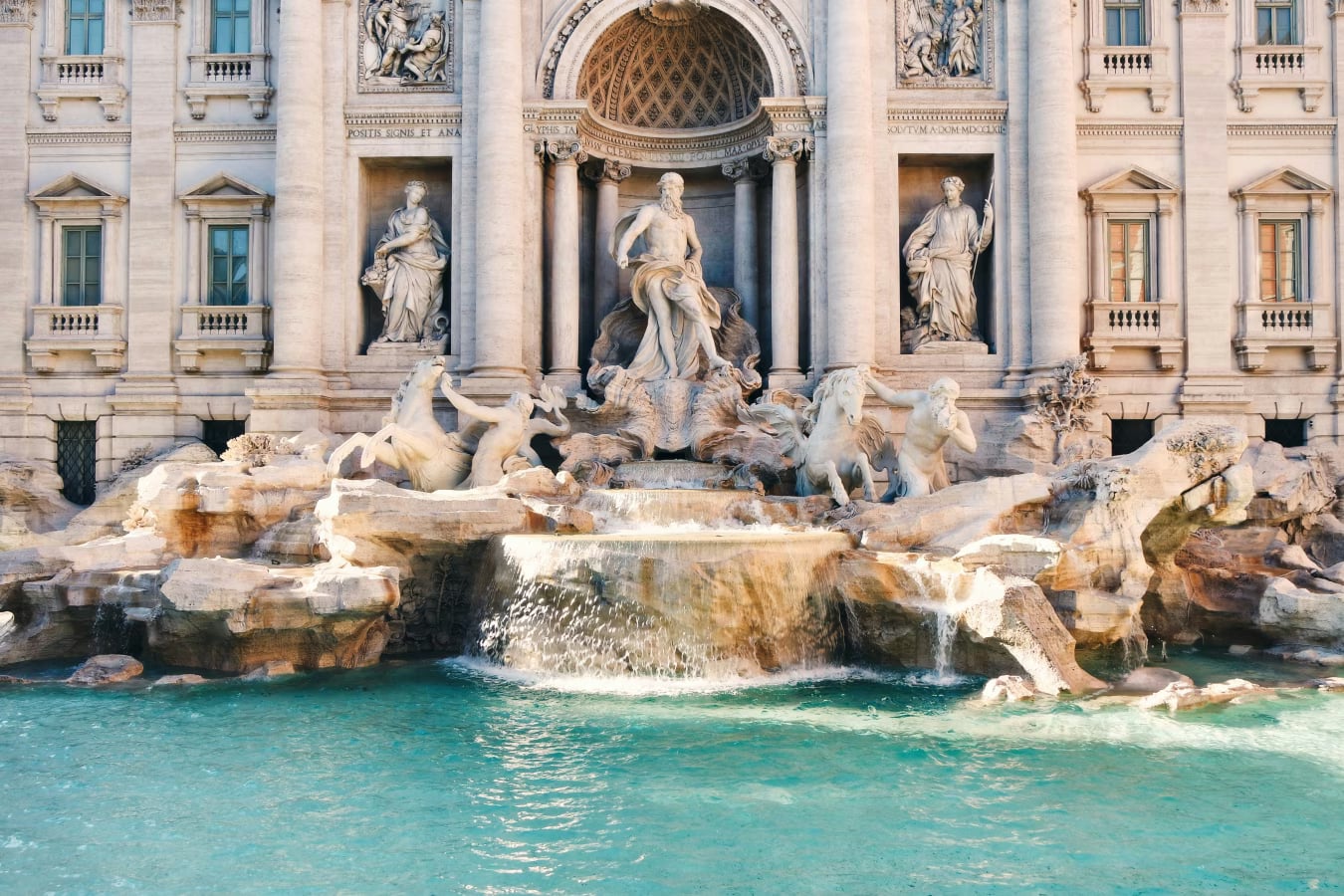
In 19 BC the Romans opened an aqueduct called the Aqua Virgo, and it has carried water into the city ever since. The audio walk traces that same water. It begins at Piazza Farnese, passes the fountains of Piazza Navona, and ends at the Trevi Fountain. Water is the thread the whole way. At the start, the twin fountains of Piazza Farnese fill granite basins that were lifted from the ancient Baths of Caracalla. In Piazza Navona the old aqueduct still feeds Bernini's fountains. Near the Pantheon it surfaces again in the fountain out on the square. The loudest stop is saved for last. At the Trevi Fountain that ancient line bursts out at full volume, the end of a channel Agrippa's engineers first laid down. This is a short, compact walk. The paving is old and uneven in places, so watch your feet. The Pantheon, Piazza Navona and Trevi fill up by mid-morning. Go early, before nine, or come back in the evening when the squares empty out. And keep your bag zipped in the crowds.
- Duration
- 45m
- Distance
- 1.8 km
- Stops
- 11 locations
- Languages
- 9 languages


Updated 2026-01-19
Interactive Map
Tour Stops (11)
Stop 1: Piazza Farnese
Renaissance Piazza Farnese - Palazzo Farnese, the twin fountains, Sweden’s Santa Brigida, and Palazzo del Gallo di Roccagiovine.
Stop 2: Campo de’ Fiori
Campo de' Fiori - a medieval “field of flowers” turned market square, marked by the Giordano Bruno monument and a lively daily scene.
Stop 3: Monument to Marco Minghetti
Monument to Marco Minghetti at Piazza San Pantaleo - beside Palazzo Braschi, near San Pantaleo church, Museo di Roma, and Museo Barracco.
Stop 4: Statua di Pasquino
Rome’s “talking statue” near Piazza Navona - Pasquino, found in 1501 and famous for satirical pasquinades.
Stop 6: Pantheon
The Pantheon - Hadrian’s great rotunda and church, facing Piazza della Rotonda with its fountain and obelisk, near Minerva and Piazza di Pietra.
Stop 7: Piazza Capranica
Piazza Capranica near the Pantheon, with Palazzo Capranica, Teatro Capranica, and the church of Santa Maria in Aquiro.
Stop 8: Palazzo Montecitorio and Obelisk of Montecitorio
Italy’s political heart in Rome - Palazzo Montecitorio, seat of the Chamber of Deputies, and Augustus’s ancient obelisk sundial marker.
Stop 9: Piazza Colonna
Piazza Colonna - the Column of Marcus Aurelius, Palazzo Chigi, and the nearby Galleria Alberto Sordi on Rome’s central Via del Corso.
Stop 10: Galleria Alberto Sordi
A bright covered arcade near Piazza Colonna - glass-roofed, early-1900s style, and a handy landmark off Via del Corso.
Stop 11: Trevi Fountain
Trevi Fountain - Rome’s most famous Baroque fountain, fed by the ancient Aqua Virgo, built into Palazzo Poli and crowned by Oceanus.
Tips & Recommendations
- Start early (before 9:00) or later in the evening for lighter crowds at Piazza Navona, the Pantheon area, and Trevi.
- Wear comfortable shoes - cobblestones and uneven paving are common.
- Bring water, especially in warmer months; fountains are easy to find, but a bottle helps between stops.
- Keep bags zipped and phones secure in busy squares, markets, and around Trevi.
- Campo de' Fiori is liveliest in the morning; if the market matters, schedule this stop earlier.
- For better Trevi photos, approach from side streets and step back to the edges instead of the center.
- If queues form at the Pantheon, enjoy the exterior first and return later; the tour still works without going inside.
- Dress modestly for churches (covered shoulders and knees is a safe choice).
- Expect GPS to drift in narrow streets - pause for a moment in open squares if audio does not trigger.
- Take short breaks in the quieter corners near Piazza Capranica to reset away from the crowds.
- Consider a quick detour to gelato or espresso along Via del Corso - it’s an easy landmark corridor if rerouting is needed.
- After dark, keep to well-lit main streets between Piazza Colonna and Trevi for easier navigation.