About This Tour
This tour brings together the most important places in central Berlin for understanding how the city moved through empire, dictatorship, war, division, and reunification. The route connects political landmarks, memorials, historic squares, and major public spaces that reveal how modern Germany presents its history in the heart of the capital. Travelers can expect a walk shaped by memory and civic life rather than a simple sightseeing loop. The atmosphere shifts between grand architecture, reflective memorials, and busy urban squares, showing how Berlin balances daily life with remembrance. It is a strong choice for anyone interested in modern European history, the Cold War, German reunification, and the public spaces where national identity and historical responsibility are still visible today.
- Duration
- 2h
- Distance
- 5.0 km
- Stops
- 18 locations
- Languages
- 9 languages


Updated 2026-04-04
Interactive Map
Tour Stops (18)
Stop 1: Paul-Löbe-Haus
Modern Bundestag building on the Spree, where reunited Berlin shaped a new image of transparent democracy.
Stop 2: White Crosses
A quiet Berlin Wall memorial by the Spree, honoring people who died trying to escape East Germany.
Stop 3: Monument of Solidarity
A Gdansk shipyard wall fragment by the Reichstag, honoring Solidarity and its role in ending Europe’s division.
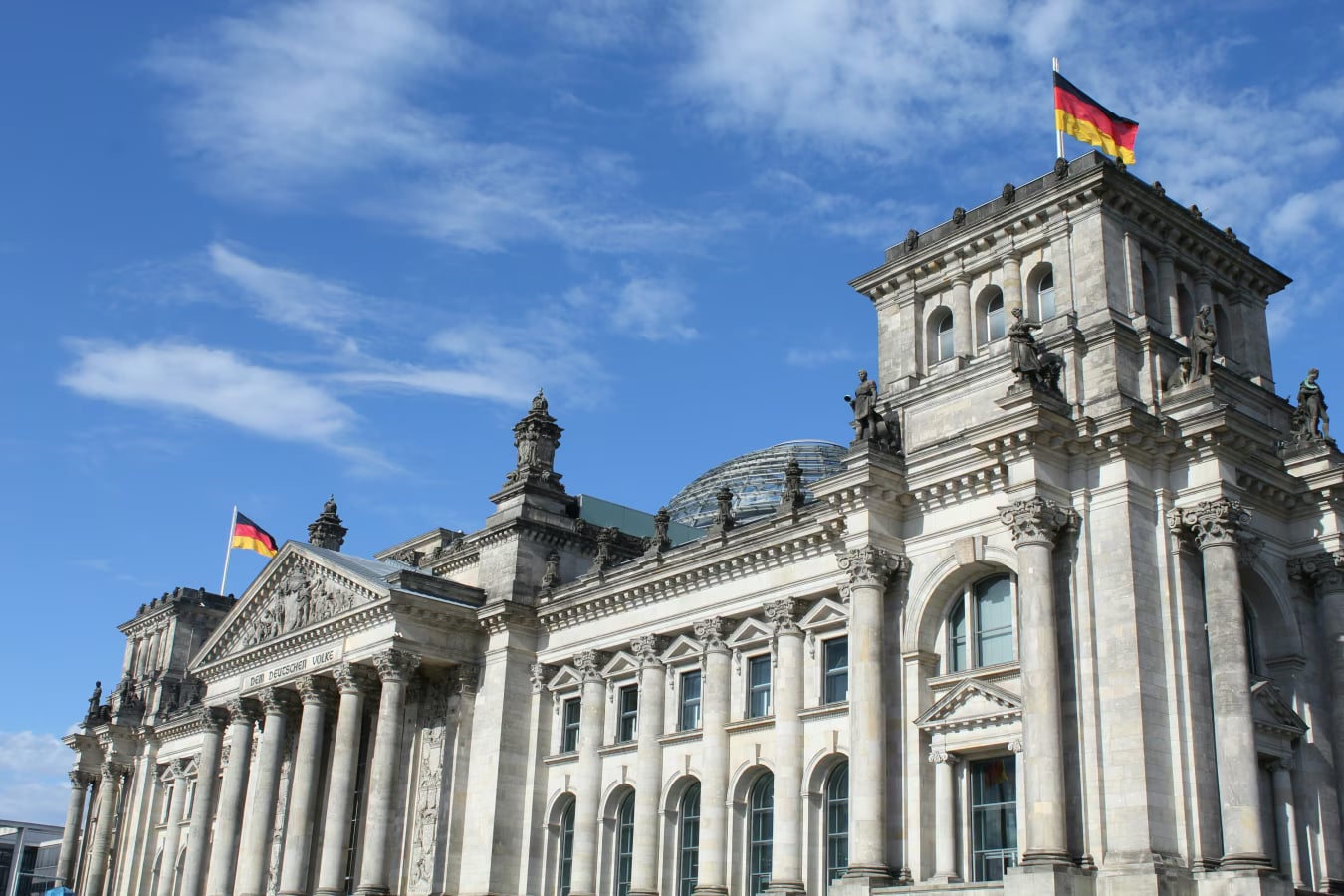
Stop 4: Reichstag Building
Berlin's historic parliament building, where empire, dictatorship, war, division, and democratic renewal meet under a glass dome.
Stop 6: Ronald Reagan Plaque
A small bronze plaque marking Ronald Reagan's 1987 Berlin Wall speech near Brandenburg Gate.
Stop 7: Brandenburg Gate
Berlin's most famous gate - once sealed by the Wall, now the strongest symbol of German unity.
Stop 8: Pariser Platz
A grand Berlin square by Brandenburg Gate, rebuilt after war and division as the city's ceremonial front door.
Stop 9: Memorial to the Murdered Jews of Europe
Berlin's central Holocaust memorial - a field of concrete stelae honoring the Jewish victims of Nazi persecution and murder.
Stop 10: Site of the Führerbunker
The hidden site of Hitler's bunker - now a quiet Berlin parking area marked to confront myth, not glorify it.
Stop 11: Wilhelmstraße
A street of power and memory, where the old Prussian and Nazi government quarter once stood.
Stop 12: Unter den Linden
Berlin's oldest grand boulevard begins here, where modern attractions and Prussian history meet on the walk east.
Stop 13: Bebelplatz
Historic square on Unter den Linden, known for the 1933 Nazi book burning and the underground Empty Library memorial.
Stop 14: Unter den Linden - Zeughaus, Kronprinzenpalais, Bertelsmann and Neue Wache
A short stretch of Unter den Linden where arsenal, royal palace, memorial, and rebuilt city facades stand side by side.
Stop 15: Lustgarten - Berlin Cathedral, Altes Museum and Sanchi Gate
A grand Museum Island panorama where garden, cathedral, museum, and palace reconstruction meet in one view.
Stop 16: Marx-Engels-Forum
East Berlin's Marx and Engels monument - a GDR-era forum where ideology, sculpture, and city memory still meet.
Stop 17: Neptune Fountain, Berlin TV Tower and St. Mary's Church
A classic Berlin view - Neptune Fountain, medieval St. Mary's Church, and the East German TV Tower rising above them.
Stop 18: Alexanderplatz
Berlin's great eastern square - where markets, East Berlin planning, protest, and constant movement shaped the city.
Tips & Recommendations
Start in the morning for quieter memorial sites and better photos around Brandenburg Gate. Wear comfortable walking shoes, as this route is best enjoyed on foot over several central districts. Book Reichstag dome entry in advance if access is part of the day, as timed reservations can fill quickly. Keep a respectful tone at memorials and remembrance sites, where quiet behavior is expected. Bring water and dress in layers, because Berlin weather can change quickly even in spring and autumn. Visit on a weekday for fewer crowds around government buildings and major squares. Allow extra time for security checks near parliament areas if entering official buildings. A light rain jacket is useful, since much of the route is outdoors with limited shelter. Public transport is easy to use if needed, so a day ticket can help shorten the walk between sections.