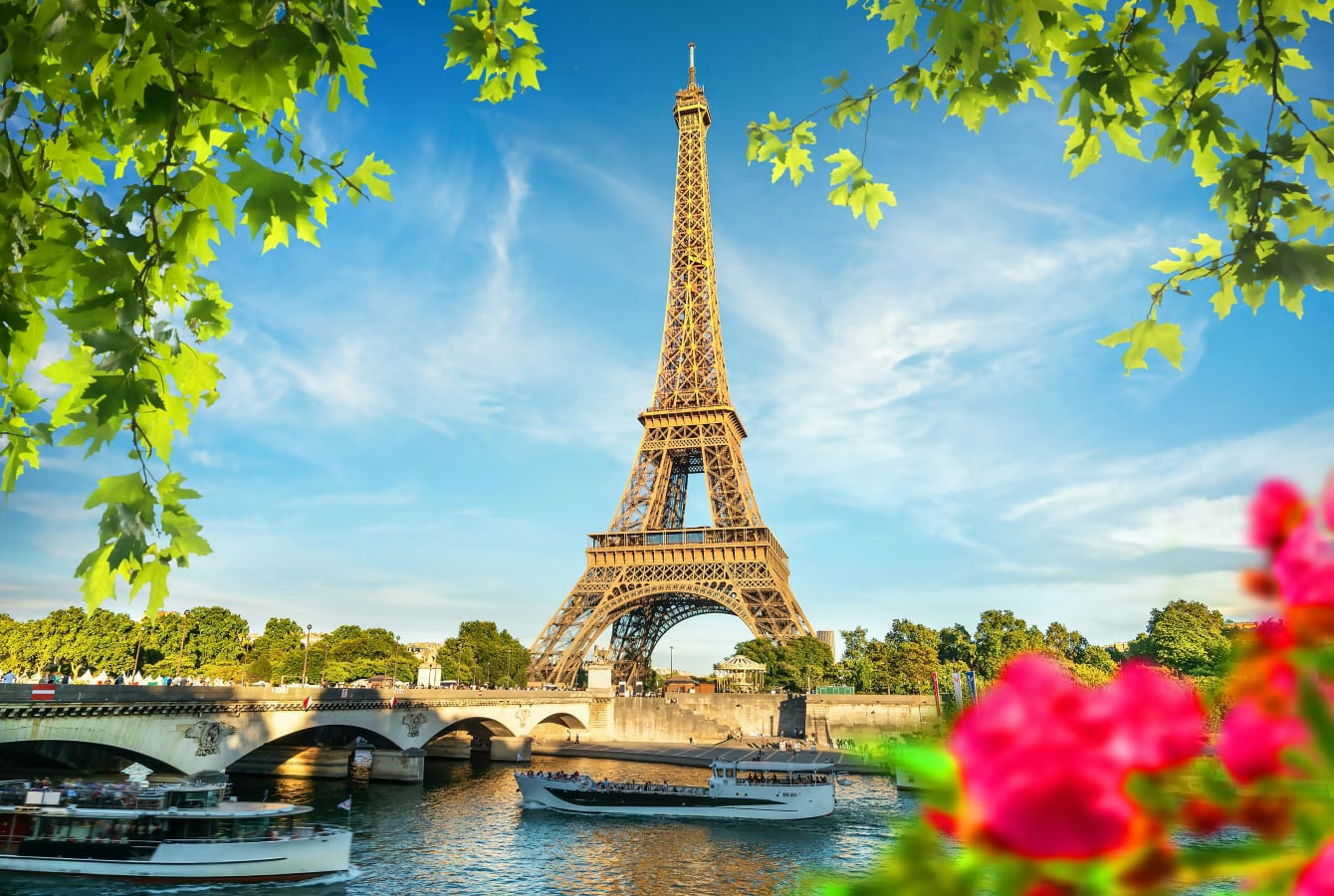
About This Tour
This tour follows a classic Paris axis from the Eiffel Tower across the historic heart of the city. It blends grand landmarks, elegant bridges, formal gardens, and powerful memorial sites tied to French history. The route moves from sweeping viewpoints and World’s Fair architecture to royal squares, revolutionary spaces, and medieval Paris. Expect open parks, river panoramas, and some of the city’s most recognizable silhouettes. Along the way, the atmosphere shifts from monumental and ceremonial to intimate and historic, ending among the Gothic landmarks of Île de la Cité. This experience highlights how Paris evolved from royal capital to modern city while keeping its visual harmony and strong sense of place.
- Duration
- 2h 30m
- Distance
- 8.0 km
- Stops
- 26 locations
- Languages
- 9 languages


Updated 2026-01-21
Interactive Map
Tour Stops (26)
Stop 1: Trocadéro Gardens and Place du Trocadéro
The classic Eiffel Tower photo viewpoint at Trocadéro, with the Palais de Chaillot, grand fountains, and key moments from WWII and 1948 history.
Stop 2: Warsaw Fountain (Fontaine de Varsovie)
The Art Deco Warsaw Fountain at Trocadéro - powerful jets, sculptures, and a classic route toward the Eiffel Tower, with an optional Bir-Hakeim view.
Stop 3: Quick note
A quick practical note before moving on.
Stop 4: Eiffel Tower
Up close at the Eiffel Tower - 1889 engineering, engraved names, sparkling night lights, repainting secrets, and a quick warning about common scams.
Stop 5: Champ de Mars
A vast Paris park linking the Eiffel Tower and École Militaire - once a parade ground, later the heart of the 1889 World’s Fair.
Stop 6: Statue of Marshal Joseph Joffre
An equestrian tribute to WWI Marshal Joffre facing the École Militaire - a powerful viewpoint linking Paris’s military past with the Champ de Mars.
Stop 7: AURA Invalides (Entrance at Place Vauban)
A 50-minute immersive night show inside the Dôme des Invalides - light, music, and video mapping, entered via Place Vauban.
Stop 8: Hôtel des Invalides
Les Invalides - Louis XIV’s veterans’ complex with grand courtyards, the golden dome, and Napoleon’s tomb.
Stop 9: Plaque commémorative du Bleuet de France
A discreet plaque at Les Invalides honoring Bleuet de France - the French cornflower of remembrance, born here in 1916 to support war-wounded and families.
Stop 10: Esplanade des Invalides
A vast green forecourt for Les Invalides - grand views to Pont Alexandre III, major public events, and an Olympic backdrop.
Stop 11: Pont Alexandre III
Paris’s most ornate bridge - a 1900 World’s Fair showpiece with gilded statues, Art Nouveau lamps, and perfect views to Les Invalides.
Stop 12: Grand Palais and Petit Palais - Avenue Winston Churchill
Grand Palais, Petit Palais, and the Churchill and de Gaulle statues - Paris’s 1900 World’s Fair avenue where art meets modern history.
Stop 13: Jardin des Champs-Élysées
A hidden green corridor along the Champs-Élysées - Le Nôtre’s historic layout, winding paths, and the Grand and Petit Palais set inside the gardens.
Stop 14: Place de la Concorde
Paris’s largest square - the Luxor Obelisk, twin fountains, city statues, grand façades, and the Revolution’s dramatic history in one view.
Stop 15: Tuileries Garden (Jardin des Tuileries)
The historic garden between the Louvre and Concorde - royal roots, Le Nôtre’s grand axis, statues, and nearby Monet’s Water Lilies.
Stop 16: The Louvre Glass Pyramid (Cour Napoléon)
The Louvre’s iconic glass entrance - I. M. Pei’s controversial Grand Louvre centerpiece, ultra-clear glass, and the famous 673-pane “not 666” myth.
Stop 17: The Louvre Museum
A former royal palace turned public museum in 1793 - vast collections, legendary galleries, and iconic highlights like the Mona Lisa in the Denon Wing.
Stop 18: Pont des Arts
A classic Seine footbridge linking the Institut de France and the Louvre - built as Paris’s first metal bridge, famed for views and the love-lock story.
Stop 19: Pont Neuf
Paris’s oldest bridge with 381 stone masks, Henri IV’s statue, and classic Seine views beside Square du Vert-Galant.
Stop 20: Place Dauphine
A hidden triangular square on Île de la Cité - created by Henri IV in 1607, calm, shaded, and steps from Pont Neuf.
Stop 21: Sainte-Chapelle
A Gothic jewel built for Louis IX’s sacred relics - walls of stained glass, a blazing rose window, and one of Paris’s most unforgettable interiors.
Stop 22: Notre-Dame Cathedral of Paris
Paris’s Gothic heart - iconic façade, rose windows, flying buttresses, and a powerful comeback after the 2019 fire.
Stop 23: Fontaine de la Vierge (Square Jean-XXIII)
A neo-Gothic fountain behind Notre-Dame - archangels, a Virgin and Child, and one of the quietest corners of Île de la Cité.
Stop 24: Pont Saint-Louis
A pedestrian bridge between Île de la Cité and Île Saint-Louis - rebuilt many times, now a wide 1970 walkway known for views and street music.
Stop 25: Église Saint-Gervais-Saint-Protais and Caserne Napoléon
A Gothic-Baroque church with a famous organ legacy beside Napoleon-era barracks built to guard City Hall - a dramatic slice of layered Paris history.
Stop 26: Hôtel de Ville de Paris (Paris City Hall)
Paris City Hall - rebuilt after the 1871 Commune fire, a major civic stage of history, with an easy metro return to Trocadéro via one transfer.
Tips & Recommendations
- Start early or near sunset to avoid heavy crowds at major landmarks
- Wear comfortable walking shoes; distances are long but mostly flat
- Evening visits enhance views of monuments and bridges, especially near the Seine
- Book tickets in advance for popular sites like the Eiffel Tower or Sainte-Chapelle
- Be alert around crowded viewpoints and transport hubs for common scams
- Allow extra time for security checks at major monuments
- Bring layers, as open areas near the river can feel cooler
- Restrooms and cafés are easiest to find near large museums and gardens
- Check closing times for gardens and monuments, which vary by season